
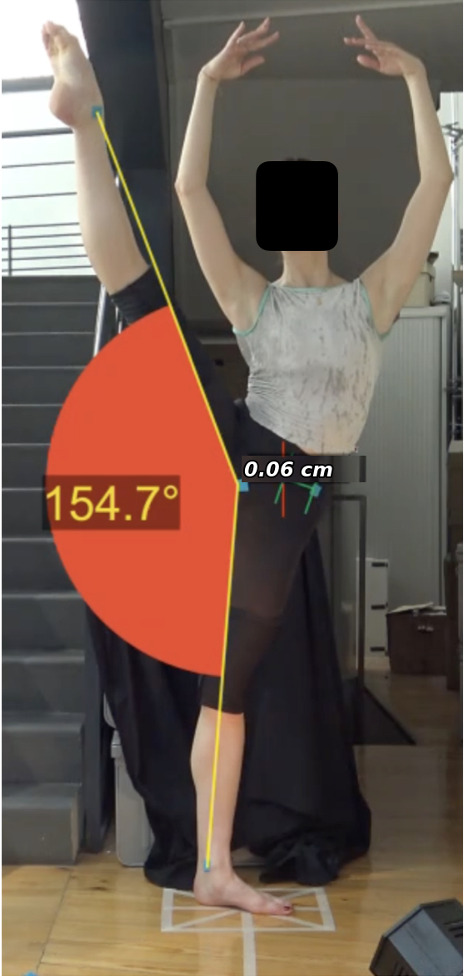
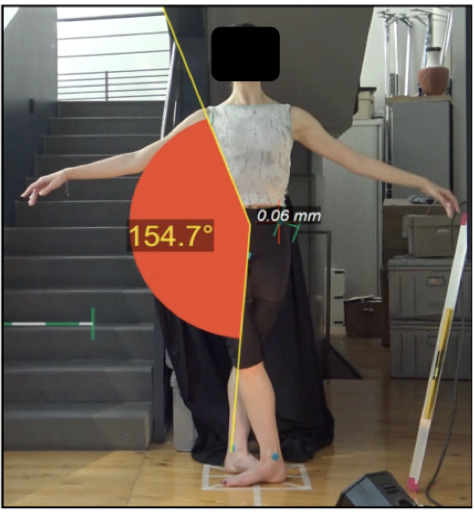
Introduction
Développé à la seconde, a segmented, frontal-plane single-leg raise in which the working leg travels from a fully adducted fifth position through the knee of the supporting leg before extending to maximal height in the lateral plane, is widely regarded as one of the most demanding and revealing movements in classical ballet.1,2 It demands the simultaneous integration of extreme hip range of motion (ROM), neuromuscular coordination, postural control, and artistic refinement. For professional ballet dancers, a high and controlled développé à la seconde is considered a substantial career indicator: a central criterion to gain attention in company auditions, a benchmark of technical development, and if it is done with ease it can be a marker of professional employability.3
Given these professional stakes, it is unsurprising that développé à la seconde and related frontal-plane movements have attracted growing scientific interest. Since the early 1990s, peer-reviewed studies have examined this movement through the lenses of joint biomechanics, motor control, stretching interventions, conditioning protocols, and imaging.4–8
However, meaningful comparison across this literature is significantly hampered by a persistent lack of methodological consistency. No standardised protocol governs how the movement should be performed, supported, initiated, terminated, or measured. Reported ROM values range from below 90° to above 140°, a spread too large to be explained by population differences alone.5,9 This review identifies five methodological parameters that have varied inconsistently across studies, traces their origins chronologically, and proposes concrete recommendations.
Methods
This narrative review draws on a literature base developed over an extended period rather than a single systematic search. The core body of literature was identified during doctoral research conducted between 2017 and 2024, undertaken under the auspices of City, University of London through Trinity Laban Conservatoire of Music and Dance. This involved searches across PubMed, Google Scholar, SportDiscus, ResearchGate, and Academia.edu, supplemented by archival research at the City University Library, Trinity Laban Conservatoire Library, the British Library, the New York Public Library, and the New York Public Library for the Performing Arts, sources that were essential for identifying historical and pedagogical ballet texts not indexed in standard academic databases. This base was updated with a further targeted search of PubMed, Web of Science, and Google Scholar between 2024 and 2026 to capture peer-reviewed literature published since the original doctoral work. Consistent with narrative review methodology, this approach prioritises depth of contextual and historical understanding over the exhaustive, protocol-driven screening of a systematic review; the resulting selectivity is discussed further under Strengths and Limitations.
Defining the Movement
Développé à la seconde is performed in the frontal plane. Beginning from a closed position, canonically fifth position, the working leg rises through a retiré (passé), with the knee flexed and the foot at the level of the supporting knee, before extending fully to maximal lateral height. The movement integrates hip abduction, external rotation, and knee extension, while the supporting leg maintains full weight-bearing and the pelvis and trunk are expected to remain as stable as possible.1,10
Critically, the movement is defined not only by the trajectory of the working leg but by the coordinated configuration of the entire body, including the arms. Despite precise pedagogical codification of arm positions in classical ballet,1 their biomechanical operationalisation varies considerably across the research literature, with consequential differences in how ROM is defined, what is measured, and which proximal landmarks and body configurations are used.
Five Categories of Methodological Inconsistency
Category 1: Barre Support
The use of a barre during data collection fundamentally alters the biomechanical and neuromuscular demands of the movement. At the barre, the upper extremity provides an additional contact point that offloads the postural demands of the movement, redistributes balance, and enables greater working leg elevation without the compensatory trunk and pelvic adaptations that characterise unsupported performance.4,11
Studies have varied markedly in whether they use a barre, what type of contact is permitted, and whether the barre condition is reported at all. Wilmerding et al.12 compared développé devant at the barre and in centre, finding significant differences in muscle activation patterns, a finding with direct implications for the generalisability of barre-based ROM data to unsupported performance. The absence of consistent reporting on this parameter means that cross-study comparisons may conflate fundamentally different movement conditions.
A compounding problem within this category is the inconsistent use of terminology to describe the type of ROM being measured. Across the literature, the terms active range of motion (AROM), passive range of motion (PROM), and functional ROM have been applied to barre-supported conditions in ways that do not reflect their conventional biomechanical definitions. A barre-supported développé à la seconde, in which the dancer maintains contact with a fixed support throughout the movement, cannot be considered a true measure of active or functional ROM, as the postural and neuromuscular demands of the movement are materially reduced by that contact. Nevertheless, this conflation between supported conditions and active or functional ROM has appeared repeatedly across the literature.3,8,13,14 In some cases the barre condition is not described at all, making it impossible to determine what type of ROM was actually measured.13 Feipel et al.15 compared barre-supported and unsupported développé conditions but did not report the ROM comparison between the two, leaving the most clinically relevant finding unreported. The consequence of this pattern is that studies nominally reporting the same outcome measure, AROM or functional ROM, may in practice be measuring substantially different things. Wilmerding et al.12 remain an important exception, having clearly demonstrated differences between barre and centre conditions; it is regrettable that the implications of those findings were not more systematically adopted by subsequent researchers.
Category 2: Starting and Finishing Position
The canonical starting position for développé à la seconde is fifth position, a fully adducted, bilaterally externally rotated closed stance. Yet the majority of studies in this literature have used first position instead, a pattern that can be traced directly to a single influential study. Gilbert et al.16 found that passive hip rotation did not correlate with functional rotation across the five classical ballet positions, and concluded, with explicit reservations, that testing in a functional first position “may be useful as a guide for functional turnout for the crossed foot positions: third, fourth and fifth.” Crucially, Gilbert et al.16 themselves stressed that this conclusion was only an indicator, acknowledged that there was no correlation between passive and functional adducted positions, and called for further studies using dynamic testing protocols. Despite these caveats, their qualified recommendation was adopted uncritically across the field, and for over two decades subsequent research tested dancers in first position on the assumption that it was representative of fifth-position capacity.17
The irony of this legacy is considerable. Dancers train, perform, and are assessed professionally in fifth position; yet the scientific literature measuring their capacities has systematically used a position that neither reflects nor predicts their functional skill in that context. Negus et al.18 recognised the importance of investigating adducted leg positions, and Kaufmann et al.19 stated the problem explicitly, questioning why researchers use first position to study dancers who practise in fifth. Departing from fifth position removes a meaningful mechanical pre-loading condition: the adducted, externally rotated starting stance engages the medial muscle chains in a way that first position does not, and this pre-loading may contribute to the subsequent elevation of the working leg. Studies beginning from first position therefore measure a biomechanically distinct movement, and their findings cannot be directly compared with those using the canonical fifth-position start.
Similarly, the finishing position, whether the dancer closes to fifth, lowers to first, or is simply instructed to return, varies across studies without justification, introducing a secondary source of incomparability that has received no critical attention.
Category 3: Anatomical Marker Placement and Measurement Conditions
ROM in développé à la seconde is typically reported as the angle of the working leg relative to the vertical or to the pelvis, or as the absolute height of a distal landmark. For the distal reference, the medial malleolus has been the near-universal choice across the literature. For the proximal reference, studies have varied between the hip joint centre, the anterior superior iliac spine (ASIS), and the pubic symphysis, and in several cases the proximal landmark is not reported at all, making replication impossible.
The choice of proximal landmark has direct consequences for data quality at higher ROM values. When testing dancers with low to mid-range ROM, the ASIS serves its purpose adequately. However, for dancers achieving ROM above 135°, the ASIS can frequently be occluded by the elevated working leg, raising serious questions about data reliability in studies that do not address this problem. The pubic symphysis offers a more reliable reference point as it remains permanently visible at all levels of ROM.20 Notably, Wyon et al.20 themselves recommended the pubic symphysis on this basis; however, an examination of the images published in that study reveals no visible markers at that landmark, suggesting that the recommendation was not implemented in their own data collection. This gap between methodological recommendation and practice within the same publication illustrates how marker placement decisions can be insufficiently scrutinised even in otherwise rigorous work. By analogy, Borhani et al.21 demonstrated in gait analysis that standard pelvic marker sets require adaptation when visibility cannot be guaranteed. Camera height and distance from the dancer should be standardised within and across studies to prevent angular distortion, and the dancer’s precise floor position should be specified to ensure anatomical landmarks remain fully visible within the frame throughout the full arc of the movement.
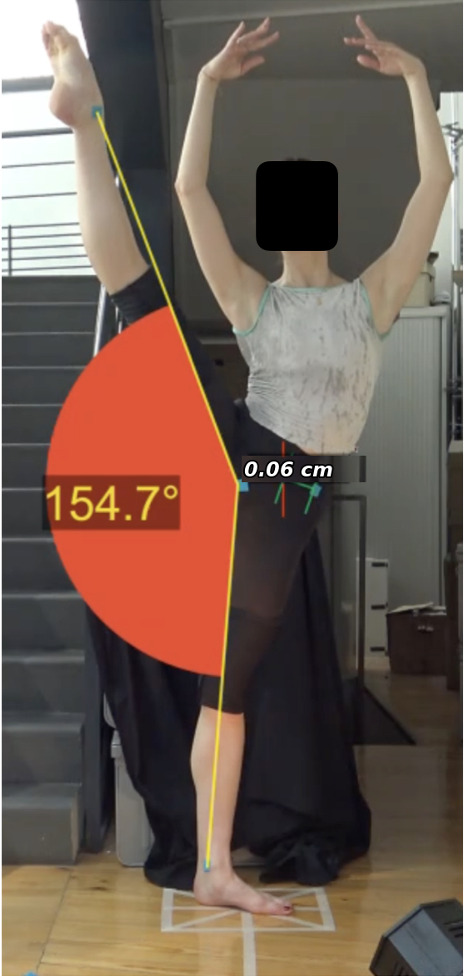
Category 4: The Postural Component
The most systematically neglected methodological issue in this literature is the failure to measure or report the postural response of the supporting side during the movement. Développé à la seconde is not simply a measure of working leg ROM: it is a dynamic postural challenge in which the working leg’s ascent must be accompanied by a controlled shift of the body’s centre of mass over the supporting leg, with compensatory adaptation occurring in the pelvis, trunk, and supporting ankle.7,22
Frontal plane lateral pelvic shift, the displacement of the pelvis toward the supporting side, is a clinically significant postural adaptation associated with this movement. It has been associated with lumbar lateral flexion, altered hip loading, and increased injury risk in the lower extremity and lumbar spine.15,18,19 Despite this, the majority of studies report only working leg ROM, effectively treating the movement as a single-joint flexibility test rather than a whole-body neuromuscular performance task.
Postural adaptation and working leg ROM are partially independent outcomes: a dancer may achieve high ROM at the cost of substantial pelvic shift, or maintain excellent postural stability with more modest elevation. Reporting only one of these variables provides an incomplete and potentially misleading picture of the dancer’s functional capacity.
The importance of measuring the postural component is further underlined by observational findings from the analysis of over 400 développés. Dancers with moderate ROM demonstrate the expected pattern: a lateral pelvic shift toward the supporting side that peaks around 90° of leg elevation. Among dancers with the highest ROM, however, a reduced postural shift is a pattern that was observed, with the pelvis in some cases returning beyond its starting point towards the working leg side as the apex is reached. This is not a universal finding, and it is not the only postural characteristic of high-ROM performance, but it is sufficiently consistent to warrant systematic investigation.
Critically, this pattern should not be interpreted as a sign of postural insufficiency. In classical ballet, ease of movement is not a byproduct of technical mastery: it is its precondition. A reduced postural shift in a high-ROM dancer may therefore reflect a movement so thoroughly integrated that it no longer requires the compensatory displacements seen at more moderate levels of performance.
Category 5: Arm Position
A methodological inconsistency that has received virtually no critical attention in the dance science literature is the configuration of the arms during measurement. Yet across the développé à la seconde literature, arm configuration has been treated as peripheral, unspecified, or self-evidently irrelevant, none of which is justified.
Beyond the fundamental question of whether the measurement is to be performed at the barre or without it, the barre condition itself directly shapes the available arm configurations in ways that have not been consistently addressed in the literature. When working at the barre, the support-based arm is in second position, thus facilitating both arms extended horizontally to the side. This is a legitimate and codified choice. However, it immediately introduces a secondary problem that has not been consistently resolved in the literature: when the working leg rises to maximal height, it must pass either in front of or behind the extended arm. Both solutions have been observed in published studies, and neither is reported as a deliberate methodological choice. This ambiguity alone constitutes a source of inter-study variance.
When the decision is made to measure without the barre, that is, to assess truly active, unsupported ROM, the fifth port de bras, in which both arms are raised en couronne above the head, offers a clean and unambiguous solution. With both arms elevated, the question of the working leg passing in front of or behind an outstretched arm does not arise. The fifth port de bras is also consistent with how développé à la seconde is frequently performed in professional performance contexts, preserving the ecological validity of the measurement.
The most problematic configuration observed in the literature is an asymmetric arm position in which one arm is raised toward the fifth port de bras while the other remains in or near second position, that is, one arm up, one arm to the side simultaneously. This creates an écarté-like asymmetry of the upper body that allows the trunk to open laterally like a fan toward the working leg, facilitating a significant increase in apparent ROM that is not a product of hip abduction capacity but of adaptive trunk displacement. Evidence presented at the International Association for Dance Medicine and Science (IADMS) 2024 conference23 documents this effect. In at least one published study, this arm configuration is not described in the methods section but is clearly visible in a photograph accompanying the paper, a situation that renders the reported ROM values uninterpretable and unrepeatable. That such a consequential variable can be absent from the methods of a peer-reviewed study illustrates the depth of the problem this review seeks to address.
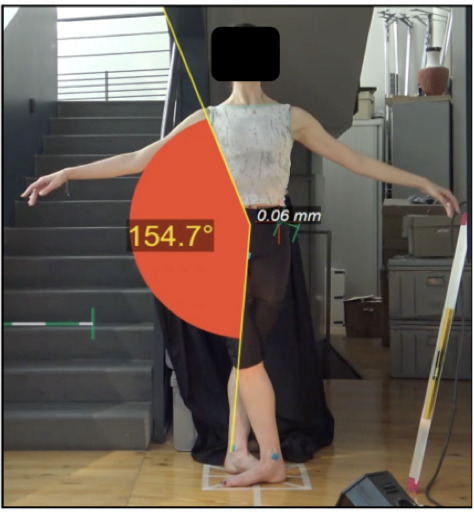
Cumulative Impact on Research Comparability
Taken individually, each of the five methodological inconsistencies identified above introduces a degree of variance that is difficult to quantify post-hoc. Taken together, their effects compound in ways that render direct cross-study comparison essentially impossible.
To illustrate: a study measuring unsupported ROM from fifth position with a validated pelvic marker set, both arms in the fifth port de bras, and a postural outcome measure tracked across the full arc of the movement in a professional company dancer is measuring something categorically different from a study measuring barre-supported ROM from first position with one arm raised and one arm to the side, using an unspecified proximal landmark in a student population. Yet both may report their primary outcome as ‘ROM in développé à la seconde’ without qualification.
The practical consequence is that the field cannot yet answer basic clinical and pedagogical questions with confidence: What is a normative range for professional dancers? Does a given intervention produce a clinically meaningful change? Are certain anatomical profiles associated with higher injury risk? These questions require a common methodological currency that the literature does not currently provide.
Recommendations
Five concrete, low-cost recommendations for methodological standardisation are proposed. Their adoption requires minimal additional resources and is achievable within standard research designs.
-
Barre condition: All studies should specify and justify whether a barre is used. Where the primary aim is to assess functional performance relevant to professional practice, unsupported measurement from fifth position is recommended as the default condition.
-
Starting and finishing position: Fifth position should be adopted as the standard starting and finishing position. Deviations, for example where injury or participant capacity requires modification, should be reported explicitly.
-
Anatomical marker placement and measurement conditions: Studies should report the proximal landmark used, the method of angle calculation, and the point in the movement at which measurement is taken. For dancers expected to achieve ROM above 135°, the ASIS should not be used as the sole proximal landmark. The temporal moment of measurement, including the movement tempo and whether a standardised count or musical phrase is used, should be specified as part of the methods. Camera height, distance from the dancer, and the dancer’s precise floor position must also be standardised and held constant across all measurement occasions within a study, to prevent angular distortion and to ensure that all anatomical landmarks remain fully visible within the frame.
-
Postural component: Postural adaptation should be included as a co-primary outcome alongside working leg ROM, and should be measured across the full arc of the movement rather than at the apex alone. Direction and magnitude of pelvic shift at multiple points in the movement trajectory are both relevant, as the postural strategies associated with high-ROM performance may differ substantially from those observed at moderate ROM. The postural and focal components of the movement are interdependent and should be studied as such.
-
Arm position: Studies should specify the arm configuration used and justify it against the relevant pedagogical standard. For unsupported measurement, the fifth port de bras, both arms raised en couronne, is recommended, as it eliminates the ambiguity of the working leg passing in front of or behind an outstretched arm that arises in barre conditions with arms à la seconde. Under no circumstances should an asymmetric arm configuration, one arm raised, one arm to the side simultaneously, be permitted without explicit acknowledgement, as this creates an écarté-like trunk opening that substantially inflates measured ROM and produces data that is neither ecologically valid nor comparable with other studies.
The adoption of these standards has implications for injury prevention, performance enhancement, and the development of screening tools for professional ballet dancers.
Strengths and Limitations
This review draws on 34 years of peer-reviewed literature, applies a novel chronological framework to trace the development of methodological inconsistencies, and is grounded in both laboratory and professional dance practice. The three authors bring complementary expertise in osteopathy, dance science, and physiotherapy research, and the core arguments were subjected to peer review at the IADMS 2024 conference, where evidence of the influence of arm configuration on measured ROM was presented, before elaboration in this manuscript. The observational postural findings reported in Category 4 represent a substantive contribution to the understanding of postural strategies in high-ROM performance.
Limitations include the inherent selectivity of the narrative review approach described above, which does not involve the exhaustive screening or formal risk-of-bias assessment of a systematic review. The review focuses specifically on methodological consistency rather than on the substantive findings of individual studies, and the recommendations, while evidence-based, have not yet been empirically validated against one another. The observational postural findings reported here require formal empirical investigation before they can be treated as established. A future systematic review applying PRISMA methodology to the full scope of développé à la seconde literature would complement and extend the present work.
Conclusion
Développé à la seconde is one of the most studied movements in classical ballet, yet five categories of methodological inconsistency, namely barre support, starting and finishing position, marker placement, neglect of the postural component, and arm position, have compounded to the point where findings from different studies cannot be meaningfully compared. This is not a consequence of the movement’s complexity alone; it is a consequence of methodological precedent being adopted uncritically, and of a broader failure to engage with the rich written codification that classical ballet has developed over centuries.
The postural findings reported here are a case in point. A reduced postural shift is one pattern observed among high-ROM dancers, one that is invisible to studies measuring only a static apex value, and that would be misread entirely without an understanding of what technical ease looks like in the body. In classical ballet, ease is not the reward for mastery; it is the path to it. Research designs that cannot distinguish effort from ease, or compensation from control, are not yet measuring what matters most.
The five recommendations proposed here are concrete, low-cost, and achievable within existing research frameworks. Their adoption would bring dance science methodology into closer alignment with the demands of professional practice and lay the groundwork for a more cumulative and clinically useful body of evidence.
Competing Interests
The authors declare no competing interests in relation to this work.
Funding
No funding was received for this research. Much of the underlying literature review was conducted as part of the corresponding author’s self-funded doctoral thesis.
Acknowledgments
The authors wish to thank the research team at Trinity Laban Conservatoire of Music and Dance, including Dr Catherine Haber, Dr James Brouner, and Scott Sinclair, as well as the direction and dancers of Les Ballets de Monte-Carlo, for their support and contributions.
AI Statement
Generative AI (Claude, Anthropic) was used during the preparation of this manuscript to assist with editorial tasks, including drafting and refining correspondence, structuring the abstract, and copyediting for stylistic consistency. AI assistance was also used to draft the Methods section describing the literature search process, based on details of search databases, dates, and institutions provided directly by the corresponding author. All AI-assisted content was reviewed, verified, and approved by the authors, who take full responsibility for the accuracy and integrity of the manuscript. AI tools were not used to generate scientific findings, interpret data, or develop the conceptual framework or recommendations presented in this review, which are based on the corresponding author’s doctoral research and the authors’ collective expertise.
Ethical Approval
The original data referenced in this narrative review, including video motion capture data from Study I and Study II conducted as part of the corresponding author’s doctoral research, were collected in accordance with Trinity Laban’s data protection and ethical guidelines. The studies and protocols were approved by the Trinity Laban Research Ethics Committee (REC), which did not issue a formal reference number for this approval. Written informed consent was obtained from all participants following full verbal and written explanation of the data collection process and their rights. Participants were assigned randomized ID numbers throughout the studies to protect anonymity.
Data Availability Statement
The underlying video motion capture data referenced in this review are not publicly available due to participant privacy and the terms of informed consent obtained under Trinity Laban’s data protection guidelines. Data may be made available by the corresponding author upon reasonable request, subject to institutional approval.
Author Contribution Statement
Peter Lewton-Brain conceived the review, conducted the underlying doctoral research and literature search, and drafted the manuscript. Annabelle Couillandre and Emma Redding supervised the doctoral research from which this review originated, including its presentation at the IADMS 2024 conference, and provided critical intellectual input throughout the conceptualization and development of this manuscript, with a shared aim of establishing improved research guidelines for the field of dance medicine and science. AC and ER critically reviewed and revised the manuscript for important intellectual content. All authors approved the final version for submission and agree to be accountable for all aspects of the work.