
Introduction
Irish dance has evolved into a highly competitive and physically demanding discipline. It is characterized by distinctive technical and aesthetic features, including explosive vertical jumps, rapid and intricate footwork, and a rigid upper body posture maintained throughout performance.1–3 These stylistic requirements create unique biomechanical challenges, as dancers must execute high-impact movements on hard surfaces, often in shoes that provide minimal cushioning or shock absorption.1,4 Understanding the factors that influence movement mechanics is therefore critical for optimizing performance and reducing injury risk.
The physical demands of Irish dance are evident in its pattern of injuries. Epidemiological studies consistently report high prevalence of musculoskeletal injuries among Irish dancers, with more than 70% affecting the lower limbs and over half of those injuries classified as overuse injuries.5–7 Common conditions include stress fractures, tendinopathies, and ligamentous injuries, which are mostly found in the foot and ankle.5–7 Forefoot striking patterns with dynamics footwork and sustained plantarflexion during jumps amplifies stress on a dancer’s joints, tendons, and bones. These factors, coupled with the aesthetic requirement for speed and precision, create an environment where injury risk is inherently elevated.
Intrinsic and extrinsic factors play a critical role in shaping the biomechanics of Irish dance and influence injury risk. Intrinsic factors, such as muscle strength, joint range of motion, neuromuscular control and anatomical alignment, determine how effectively a dancer can generate force, absorb impact, and maintain stability during demanding movements.8–11 These elements determine how efficiently a dancer can generate force, absorb impact, and maintain balance during complex movement sequences. Extrinsic factors encompass environmental and equipment-related variables, including footwear design, floor surface, training load, and choreography demands.12–14 Irish dance shoes, particularly hard shoes, alter shock absorption and ground reaction forces, while the rigidity of performance surfaces can amplify impact stresses.4 Additionally, repetitive practice of high-impact steps and leaps without adequate recovery can exacerbate tissue strain.2 These external conditions interact with intrinsic characteristics, creating a dynamic system that influences both performance outcomes and injury risk.
Despite the growing popularity of Irish dance over the last 20 years and its recognized injury burden, there is limited research examining the underlying biomechanical mechanisms that contribute to these injuries. Understanding the movement patterns and the forces acting on the body during Irish dance movements is essential for identifying risk factors, informing evidence-based injury prevention strategies, and optimizing performance. Previous studies in other dance forms, such as ballet and contemporary dance, have demonstrated the value of biomechanical analysis in reducing injury incidence and improving training protocols.10,15–17 However, the unique movement characteristics of Irish dance warrant focused investigation.
Understanding the biomechanics behind these Irish dance movements can help dancers, instructors, and healthcare providers implement better training techniques to reduce the risk of long-term damage and enhance performance longevity. The purpose of this study was to conduct a systematic review (SR) that investigated the kinematic and kinetics variables that have been examined in the Irish dance population. A secondary purpose is to examine the intrinsic and extrinsic factors that influence the biomechanics of Irish dance movements.
Methods
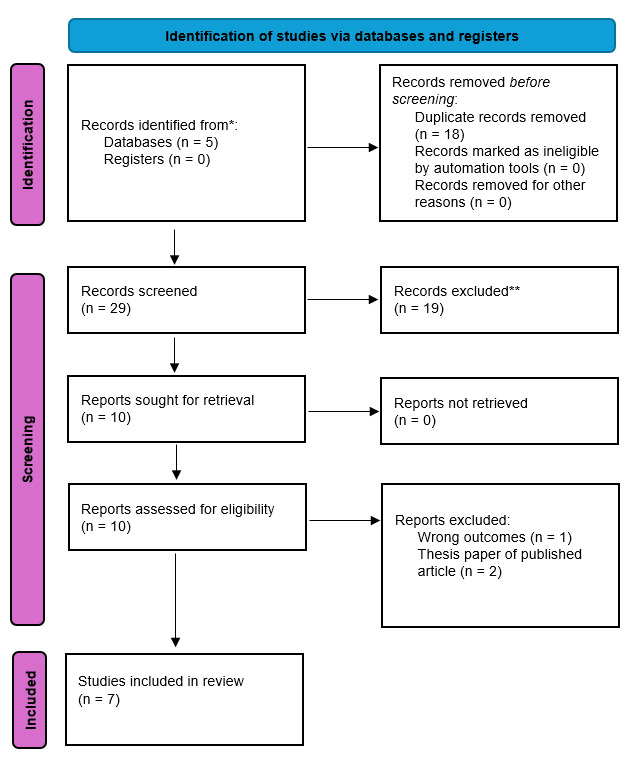
A systematic search of online databases was conducted in March of 2024 in accordance with the Preferred Reporting Items for Systematic Reviews and Meta-Analysis (PRISMA) protocol framework. A second search was performed in July of 2025 using the same parameters to capture any new publications. Two authors independently screened the literature, following the process outlined in the PRISMA diagram (Figure 1). Both authors convened to compare and filter results. A third rater was not needed to reconcile any disagreements.
Search Strategy
The two independent researchers conducted this systematic review to find articles that examined kinematic or kinetic data of Irish dance movements. The electronic databases that were included in the search were Cumulative Index to Nursing and Allied Health Literature (CINAHL), Medical Literature Analysis and Retrieval System Online (MEDLINE), PubMed, SPORTDiscus, and ProQuest Open Dissertations & Theses. Agreed upon search terms used were key words related to Irish dance and biomechanics. Use of these terms resulted in the following search strategy: (“Irish dance”) AND (“Biomechanics” OR “Kinetics” OR “Kinematics” OR “ground reaction force”).
Eligibility Criteria
Articles for this systematic review were included in this study if they were a systematic review, randomized control trial, cross-sectional study, cohort study, case study, dissertation, or master thesis. The inclusion criteria included studies that (i) examined participants who were solely Irish dancers of any performance level, (ii) where one or more kinetic or kinematic outcome measure was reported, and (iii) if the article was published in English. Studies that were excluded from the SR were studies that included participants who were solely non-Irish dancers.
Study Selection
After the independent searches were performed in each of the databases, results were compiled, then duplicates were identified and removed using Covidence.18 Next, the two authors screened the articles by title, abstract, and full text independently, then compared their findings together. Articles were removed if they did not meet the eligibility criteria.
Quality appraisal
An assessment of methodological quality was performed for each article that was included in the final review. Each article was appraised and classified using the Oxford Centre for Evidence-Based Medicine (OCEBM) Levels of Evidence independently.19 Articles included for the final review along with their OCEBM classification can be found in Table 1. Then internal validity of each article was appraised independently by each researcher using the appropriate the National Institute of Health quality assessment tools.20 Results from this analysis can be found in Table 2. There were no disagreements regarding the level of evidence, type of study, or assessment quality.
Data extraction
During this phase of the review, the two authors extracted the following data from the selected articles: author(s), publication year, study design, aim of the study, subject characteristics (biological sex, performance level, and age), number of subjects, inclusion criteria, exclusion criteria, dance movements analyzed, equipment used (including frequencies and frame rates), kinetic and kinematic outcome measures, and results of each study. The included articles’ characteristics are presented in Table 1. Information about outcome measures and results can be found in Table 3.
Results
Study selection
From the initial search, 47 articles were imported into Covidence. Eighteen articles were determined by Covidence as duplicates, which left 29 articles to be screened. Nineteen articles were removed after screening titles and abstracts, resulting in the 10 articles that were retrieved for full text review. Three studies were excluded; one did not report kinematic or kinetic outcomes, and two were thesis reports duplicated data and outcomes from corresponding published articles. A total of 7 studies were accepted for the final review. The results of the search can be found in the PRISMA flow diagram (see Figure 1).
Study Characteristics
All the articles were categorized as cross-sectional studies. A total of 80 participants were accounted for with most of the participants being female (96%). The average age of the total number of participants was unknown because most studies reported age means, one study reported age range, and one study didn’t report participant age. Only one article utilized professional level Irish dancers.4 The remaining studies utilized competition level dancers, most of whom were open level dancers.1,2,4,21,22,24 A variety of dance activities were analyzed across the studies. The leap over (also known as the fly in one study) was the only dance movement investigated in more than one study.1,2,21,24
Other dance movements examined were the birdie, bicycle, skip, stomp, double-toe, click, sauté en pointe, entrechat deux, 360 spin, and the rock step. All the studies collected kinetic data using a force plate except for one study that used a pressure sensor. Reported kinetic outcome measures included ground reaction force, peak muscle force, maximum pressure, center of pressure, rise rate, and impulse. Only one included study reported kinematic data obtained using a three-dimensional motion capture system, assessing peak angular displacement of the ankle, knee, hip, and trunk during a leap.2 Several studies collected kinematic data using a 3D motion capture system but then used that data to calculate kinetic data but did not report on the specific kinematic data.
Ground Reaction Forces
Peak ground reaction force was one of the most reported kinetic outcome measures across the reviewed articles. Christiansen et al.,1 who examined 8 different Irish dance movements, reported significant differences in loading characteristics across both movement types and footwear conditions (hard shoe versus soft shoe). Among the movements examined, the stomp produced the highest peak force, whereas the skip produced the lowest. Across participants, peak forces ranged from .67 to 9.86 times body weight. Robinson et al.22 examined dancers landing from a 360˚ spin and found a statistical difference in peak ground reaction forces between pre-fatigue and post-fatigue conditions for the left foot, but not for the right foot.
Shippen & May23 examined the rock step and reported that the peak ground reaction forces exceeded 2.5 times body weight for all participating dancers, with one dancer recording greater than 4.5 times body weight. Radcliffe et al.26 examined peak Achilles tendon forces and found significant differences in peak tendon force across three different landing tasks: the leap, entrechat deux, and the skip.
Other External Forces
Several studies reported external force outcome measures, including rise rate, impulse, center of pressure, maximum pressure, and external knee-flexion moments. Christiansen et al.1 found significant differences in rise rate and impulse across Irish dance movements and footwear conditions, with the double-toe movement exhibiting the highest rise rate and the skip the lowest. Across participants, rise rates ranged from 10 to 147 times body weight per second, while impulse was greatest during the leap and lowest during the skip, with individual impulse values ranging from -0.12 to 0.32 times body weight per second.
Tregouet and Merland4 also examined impulse when comparing footwear and reported an 18% increase in impulse when dancers wore soft shoes compared with trainers, and a 5% increase when wearing hard shoes compared with trainers. In the same study, maximum pressure differed significantly across footwear types, with the forefoot experiencing greater pressure than the rearfoot.
Center of pressure was examined by Robinson et al.,22 who reported no statistically significant differences between pre-fatigue and fatigued leap trials; however, left foot landings showed a trend toward significance. Additionally, Wild et al.2 reported that Irish dancers exhibited greater external knee-flexion moments during the post-fatigue landing trials of the leap.
Internal Forces
Internal forces such as muscle forces and joint forces were also frequently reported across studies. Wild et al.2 reported that Irish dancers displayed greater anterior shear and compressive forces at the ankle during the post-fatigue landing trials of the leap than the pre-fatigue landing trials. Wallace et al.24 also looked at the leap and found a significant association between lack of hip turnout and peak ankle internal rotation moments during the jump landing. In contrast, Shippen &May23 reported substantially greater internal loading with estimated ankle joint contact forces during the rock step reaching as high as 14 times body weight. In addition, muscle force estimates for one dancer showed peak forces of 2501 N in the gastrocnemius and 1495 N in the soleus, highlighting the large contribution of plantarflexor muscle activity to the ankle joint loading.
Kinematic Measures
Wild et al.,2 the only study to report on joint angles, found that fatigued dancers demonstrated altered lower-extremity landing mechanics during a leap. Specifically, landings were characterized by reduced ankle plantar flexion, reduced hip external rotation, and increased hip adduction at initial contact.
Quality assessment
The quality assessment results are summarized in Table 2. Among the seven articles reviewed, three achieved a good quality rating, while two were classified as fair and two as poor. The highest risks of bias were observed in the categories for sample size justification and the blinding status of assessors. None of the seven studies incorporated blinding, which may be attributable to their cross-sectional design. A lack of power analysis in most studies contributed to the bias in sample size justification. Sample sizes were low across all seven studies, with the maximum reported at 16 participants.1 The next highest risk of bias was seen in the category of identifying the participation rates of eligible persons. This poor rating may reflect both the absence of sample size justification and a possible low response rate.
Discussion
This review is the first to synthesize research examining the kinetics and kinematics of Irish dance movements. Previous biomechanical investigations of other dance forms, including ballet and contemporary dance, have provided important insights into injury risk and determinants of performance.15,27 The Irish dance movements analyzed in this review encompass a wide range of technical demands and exhibit unique biomechanical characteristics. Although all movements share aesthetic requirements such as an upright posture and precise, rapid footwork, they differ substantially in the kinematic strategies and kinetic loading characteristics. Notably, the majority of movements examined involved jumping or hopping.
The biomechanics of Irish dance movements are influenced by a complex interplay of intrinsic and extrinsic factors that collectively govern how forces are generated, transmitted, and absorbed during performance. Research in other dance styles has identified several intrinsic risk factors associated with injury, including psychological characteristics, muscular strength and power, joint mobility, neuromuscular control, and fatigue, all of which influence individual movement strategies and loading patterns.28–30 These internal characteristics interact with extrinsic constraints unique to Irish dance, including rigid aesthetic demands, high jump frequency, fast tempos, footwear, floor interface properties, and repetitive training exposure.
Together, these intrinsic factors shape how Irish dancers execute jumps, landings, and transitional movements, thereby influencing both performance efficiency and musculoskeletal loading. Understanding this interplay is essential for interpreting movement mechanics in Irish dance, as well as for identifying performance limitations and mechanisms underlying injury risk. Accordingly, the authors of this review focused on intrinsic and extrinsic factors that were examined within the included studies, specifically task activity, fatigue, shoes, and hip contributions.
Task Activity
Jumping is fundamental in Irish dance, and this review analyzed several jump-based movements, including the birdie, bicycle, click, entrechat deux, leap over, and sauté en pointe. Among the jumps analyzed, the leap over produced the greatest number of significant findings and was the one task commonly observed across studies. The execution of this jump requires a unilateral take-off, midair leg switch, and landing on the opposite leg with full knee extension and a plantarflexed ankle. Christiansen et al.1 found that the leap over produced the highest impulse. Greater impulse translates to more momentum and higher jump height, which also contributes to increased loading demands.
During jumping, ground reaction forces can significantly exceed body weight, creating high impact stresses on bones, tendons, and joints.27,31,32 Loading rates have been reported in ballet-specific jumps to be between 1.4 to 9.6 times BW, with the highest forces (3.2 to 9.6 BW) observed during the grand jeté.15 In comparison, the Irish dance leap over produces peak landing forces ranging from 3.05 to 5.26 times BW,22 which falls within the range of ballet jumps but below the extreme forces seen in the grand jeté. Both these jumps require vertical and horizontal displacement of the body followed by a single-leg landing, placing significant demands on the lower extremity joints to decelerate the body and limit forward progression of the center of mass. These findings suggest that unilateral take-off and landing mechanics increase loading compared to jumps that require bilateral lower extremity take-off and landing. Further investigation of the leap over by Wild et al.2 reported increased anterior and compressive ankle-joint forces post-fatigue, suggesting that fatigue may heighten injury risk during prolonged training or performance. Understanding these biomechanical characteristics is essential for designing effective injury prevention strategies.
The birdie, bicycle, and click jumps examined by Christiansen et al.1 similarly involved unilateral take-off and landing mechanics, with high-velocity footwork performed during the flight phase. Each of these movements required forward propulsion, with the dancer both initiating and completing the jump on a single limb, similar to the leap over jump. Single-leg jumping tasks impose substantially greater mechanical demands on the supporting limb compared to bilateral movements.33 When force production and impact attenuation are confined to a single limb, lower extremity joints and soft tissues are exposed to higher relative loads, increased joint moments, and greater demands of neuromuscular control. These demands are further amplified by the aesthetic constraints of Irish dance, such as reduced hip and knee flexion and rigid trunk positioning, that limit visible shock-absorption strategies.
Meanwhile, the entrechat deux, similar to the ballet movement of the same name, and sauté en pointe (often referred to as a toe stand) are bilateral jumps in which the dancer takes off from and lands on both limbs simultaneously. Compared to unilateral jumps, bilateral take-off and landing distribute force production and impact attenuation across both lower extremities, resulting in lower relative loads per limb. These jumps rely on coordinated, symmetrical activation of the plantarflexors, knee extensors, and hip extensors to generate vertical impulse, while controlled eccentric action across the same muscle groups facilitates landing stability.
However, despite the shared load distribution, the requirement for precise timing, vertical alignment, and minimal visible joint flexion still imposes substantial demands on ankle stiffness regulation and neuromuscular control. As such, bilateral jumps in Irish dance may reduce side-to-side loading asymmetries compared to single-leg tasks, yet they remain mechanically demanding due to the constraints on shock absorption and the repeated high-frequency nature of performance.1
Other footwork-dominant movements in Irish dance, such as the stomp, double-toe, rock step and skip, are characterized by rapid, repetitive complex foot movements, often requiring percussive sounds, while maintaining an upright posture. These steps demand exceptional speed, precision, and control, often performed on hard surfaces with minimal shock absorption from traditional footwear. Unlike jumps, which involve high peak forces, footwork sequences generate lower individual impact forces but impose significant cumulative loading on the metatarsals, ankle joint, and associated soft tissues due to their high repetition rate. The stomp produced the highest peak force, whereas the skip had the lowest.1 The stomp is a step that requires the dancer to strike the floor with their foot in order to produce noise. The skip is a traveling step that combines a hop and a forward movement. The greatest rise rate, defined as the rate at which force increases from initial contact to peak, occurred during the double toe.1 The double toe movement can be described as a complex movement involving striking the floor with the distal end of one foot, leaping onto its toe, and replacing the original supporting leg. In contrast, the skip exhibited the lowest rise rate, as well as peak force and impulse, likely due to its role as a transitional or preparatory step. The rock step is a dance move that shifts weight back and forth between the feet in a controlled, rhythmic manner. Shippen23 highlighted the extreme forces generated during the rock step, reporting ankle contact forces up to 14 times body weight. The gastrocnemius experienced the highest muscular load at 2,520N, compared to 1,495N in the soleus, underscoring the substantial strain placed on the lower leg and ankle during this movement and its potential for injury. The rock step involves quick weight shifts and directional changes, creating repetitive loading patterns that can strain ligaments and tendons. Although these movements typically generate lower peak vertical forces than jumps, the combination of rotational torque, asymmetrical loading, and high repetition rates may contribute to overuse injuries, particularly in the ankle and knee joints.
Fatigue
Fatigue has been researched in sports literature and results have varied or been inconclusive for several reasons, such as methodology variability or inconsistency in the type of protocol utilized.34 This review identified three studies that examined the effects of fatigue on Irish dance biomechanics; however, variation in fatigue protocols and the limited number of significant findings across these studies make it difficult to draw definitive conclusions.
Radcliffe et al.21 implemented a four-part protocol involving repeated landing tasks, multiple soft-shoe dance pieces, and a maximal exertion performance, whereas Wild et al.2 used repeated leap overs to a metronome until participants reached a rate of perceived exertion (RPE) of 17.
Despite the cardiovascular demands of Irish dance making fatigue a critical factor in injury prevention, neither study employed a validated fatigue protocol. Fatigue protocols that target general fatigue are considered more effective at replicating the physiological and neuromuscular demands of real-world performance.34
The study by Robinson et al.22 examined the 360˚ spin, a movement involving takeoff from the lead foot, a full airborne rotation with legs extended and feet plantarflexed and landing on the opposite foot. Using the same fatigue protocol as Wild et al.,2 the authors found no significant difference in peak vertical ground reaction force between fatigued and non-fatigued trials on the right foot. However, fatigued trials on the left foot exhibited significantly greater ground reaction forces compared to non-fatigue trials. These findings suggest that fatigue may selectively influence landing forces depending on limb dominance and movement complexity. Irish dance is traditionally taught with strong emphasis on bilateral practice, in which dancers perform combinations beginning with the right foot and then repeat the same steps leading with the left foot. While this approach is intended to promote symmetry and technical consistency, habitual repetition may still contribute to subtle leg dominance over time. Dancers often develop a preferred takeoff, landing, or stabilizing limb due to differences in strength, coordination, or neuromuscular control, particularly during high-impact movements such as jumps, hops, and rapid traveling steps. Even when choreography is practiced on both sides, the limb that feels more stable or powerful may assume a greater role in force production and balance, potentially leading to asymmetries in muscle strength, joint loading, and movement mechanics. Over prolonged training, this functional dominance may influence performance quality and increase the risk of overuse injuries if not addressed through targeted conditioning and cross-training strategies.
Hip Mobility
Turnout, defined as bilateral hip external rotation, is an essential component of Irish dance technique. Irish dancers are required to land most jumps in turnout, similar to ballet dancers.1,2,25 Wallace et al.24 identified a link between insufficient hip turnout and increased peak ankle internal rotation moments during the landing phase of the leap over (also called the fly).
Using segment axial kinematics and joint kinetics from 13 competitive dancers, the authors applied statistical parametric mapping (SPM) to demonstrate these relationships between hip and ankle axial kinematics and knee and ankle axial rotation moments. Previous dance literature indicates that inadequate hip external rotation increases stress on the knees and ankles, contributing to poor turnout and compensatory patterns, such as knee valgus or foot pronation, which increases the risk of injury.35,36
Footwear
Shoes also play a critical role in shaping the biomechanics of Irish dance movements. The design and structure of footwear influence how forces are absorbed and transmitted through the lower limbs during high-impact steps and leaps. Hard shoes, which are similar to tap shoes, amplify sound for performance but reduce natural shock absorption, increasing stress on joints and soft tissues. However, soft shoes, commonly known as gillies, are lightweight, slipper-like shoe that provide minimal structural support. Tregouet and Merland4 investigated how footwear influences loading patterns by comparing soft shoes, hard shoes, and trainers worn by Irish dancers. Statistical analysis revealed significant differences in force-related variables among shoe types, as well as an interaction between shoe type and foot region. Forefoot forces were greatest in soft shoes, likely due to their minimal structural support. Maximum pressure differed significantly among shoe types, with the forefoot consistently registering higher forces than the rearfoot. This is expected, as Irish dancers spend much of their time on the metatarsals in a relevé position. Impulse was greatest when considering the whole foot, indicating substantial cumulative loading during Irish dance. Consequently, footwear is not only a performance tool but also a key factor in injury prevention and overall biomechanical efficiency in Irish dance.
Research in dance medicine and biomechanics shows that footwear plays a critical role in how forces are transmitted through a dancer’s body, influencing performance, balance, and injury risk. Studies demonstrate that shoe characteristics such as midsole thickness, stiffness, and structural support significantly affect landing mechanics and postural stability; for example, thicker midsoles in dance shoes have been shown to reduce sensory feedback from the foot and negatively impact dynamic balance during single-leg landings, a common injury mechanism in dance.13 In ballet, pointe shoes substantially alter foot and ankle biomechanics by redistributing plantar pressures toward the forefoot and toes, increasing joint loading during extreme plantarflexion, and placing greater demands on muscular control and technique. Systematic and scoping reviews further highlight that shoe condition and design features such as shank stiffness and toe box structure can meaningfully change force distribution and stability, thereby influencing both performance efficiency and injury risk.13,37
Limitations and future research
Although this systematic review offers valuable insights, several limitations should be acknowledged. All included studies had small sample sizes, with the largest involving only sixteen participants, limiting generalizability to the broader Irish dance population. The available evidence consisted solely of cross-sectional studies and was characterized by methodological heterogeneity, including variation in tasks and outcome measures, as well as inconsistent reporting of kinematic and kinetic variables, which reduces comparability across studies. Additionally, over half of the studies were rated as fair or poor in methodological quality, raising concerns about internal validity. Inconsistent dance terminology across studies also posed challenges; therefore, movement names were reported as described in the original articles for clarity.
Despite the growing body of research, substantial gaps remain in the biomechanics literature on Irish dance. Future investigations should prioritize larger sample sizes and longitudinal study designs to better capture how biomechanical loading patterns evolve across training stages and competitive seasons. Greater standardization of movement terminology, data collection protocols, and outcome measures would improve comparability across studies and strengthen the overall evidence base.
Further investigation into fatigue is particularly warranted, using validated, dance-specific protocols that accurately reflect the physiological and neuromuscular demands of Irish dance performance. Studies incorporating electromyography and wearable sensor technologies may offer valuable insight into muscle activation strategies, fatigue-induced compensatory movements, and cumulative mechanical loading during training and competition scenarios.
Additional research is needed to examine the influence of growth and maturation in youth dancers, and sex-specific biomechanical differences. Besides improving methodological rigor, future studies should include larger and more diverse samples. Male Irish dancers, for example, were included in only three studies, highlighting a notable gap in the current biomechanical literature. Comparative investigations between professional and competitive dancers, as well as between healthy and injured Irish dancers, would further enhance understanding of performance determinants and injury mechanism.
Conclusion
This research demonstrates that biomechanics plays a critical role in understanding both the performance demands and injury risks associated with Irish dance. The distinctive aesthetic of the form, characterized by a rigid upper body posture, repetitive jumps, rapid footwork, and landing on a plantarflexed ankle, places unique mechanical stress on the lower extremities.
Biomechanical analysis highlights how force production, joint loading, alignment, and muscle activation patterns contribute to the execution of Irish dance technique while simultaneously increasing susceptibility to overuse injuries, particularly at the ankle, knee, and lower back.
By applying biomechanical principles to Irish dance, this research emphasizes the importance of evidence-based technique refinement, and injury prevention strategies. Improved awareness of landing mechanics, strength asymmetries, and neuromuscular control may enhance educational and conditioning strategies, ultimately optimizing movement efficiency, reducing injury risk, and supporting the continued evolution of this physically demanding art form. Continued research is warranted to further inform dancers, instructors, and clinicians working with this specialized population.
Financial Support
This research received no specific grant from any funding agency in the public, commercial, or not-for-profit sectors.
Conflict of Interest
The authors declare no conflicts of interest.